Washing Machine Not Draining? Here’s What to Do

Washing Machine Not Draining? Here’s What to Do

Spin function failure is one of the most common problems washing machine owners encounter. Causes can range from a simple program glitch you can fix yourself in minutes to a serious breakdown that requires professional repair.

Manufacturers of washing machine cleaning products often depict this situation: a front-loading machine has finished washing but cannot drain the water. They suggest a blockage caused by limescale — such as a clogged pump filter, a blocked pump impeller, or build-up between the drum and tub. However, the problem is usually something else. Let’s explore the most common causes.

In this article, we’ll break down which problems you can solve on your own, and when it’s better not to risk it and entrust your appliance to an experienced technician – washing machine repair.
Problems You Can Solve Yourself

Before calling a service center, it’s worth checking a few things. Often, the cause lies in minor details that don’t require special knowledge—only your attention and simple maintenance.

Clogged pump or filter

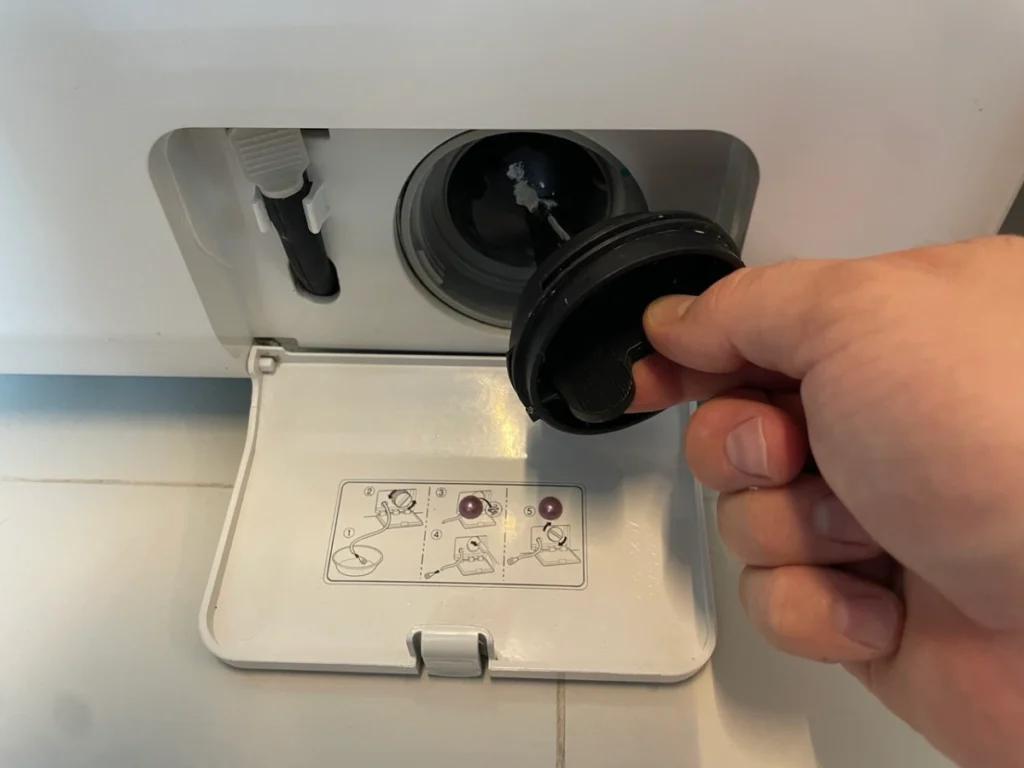
At the bottom of most washing machines, there is a small hatch. Behind it is the drain pump filter, which catches small debris: coins, paper clips, hair, threads, and pieces of limescale. If it’s clogged, water cannot drain properly, and the system blocks the spin cycle.

Unplug the machine, place a shallow container under the hatch to catch any remaining water, and carefully unscrew the filter. Rinse it under running water and reinstall it. We’ve already covered this in detail in our article on washing machine maintenance, which also includes other tips to help extend the life of your appliance.

Improper loading of laundry (imbalance)

If you’re washing a single heavy item (like a bathrobe) or, on the other hand, have overloaded the drum, the laundry can clump together. Modern machines are equipped with imbalance sensors—they simply won’t allow the drum to speed up to high revolutions to avoid strong vibration and damage.

Open the door, distribute the laundry evenly inside the drum, or remove the excess. Then, start the spin program again.

Accidental program glitch

Electronics, like any technology, can fail. Sometimes a simple reboot is enough to get the machine back in working order.

Unplug the washing machine from the outlet for 10–15 minutes, then plug it back in and try to run the spin cycle.

Clogged or kinked drain hose

Make sure the hose running from the machine to the drain is not pinched or sharply bent. Sometimes a clog can form inside it as well.

Carefully disconnect the hose and rinse it under a strong stream of water.

What Commercials Show vs. Reality

Cleaning product manufacturers often show a scenario where the machine has completed its cycle, but water remains in the tub. The commercial suggests that “dirt inside” is to blame and that only a miracle product can fix it.

In reality, the problem is usually related to:

  • a clogged filter or drain pump—coins, lint, threads;

  • a partially clogged drain hose;

  • build-up or debris interfering with the pump impeller.

⚠️ Important!

If the machine still isn’t draining, it will require disassembly (of the pump filter) and flushing the hose or clearing a drain blockage. Cleaning agents can be helpful if the issue is caused by limescale buildup or for preventive maintenance. However, they won’t solve the problem if the water isn’t draining due to a serious blockage.

Issues Only a Technician Can Solve

If these simple steps didn’t help, the breakdown is likely more serious. Attempting repairs yourself in such cases without experience and tools can lead to even greater damage and even render the appliance completely unusable.

Faulty drain pump

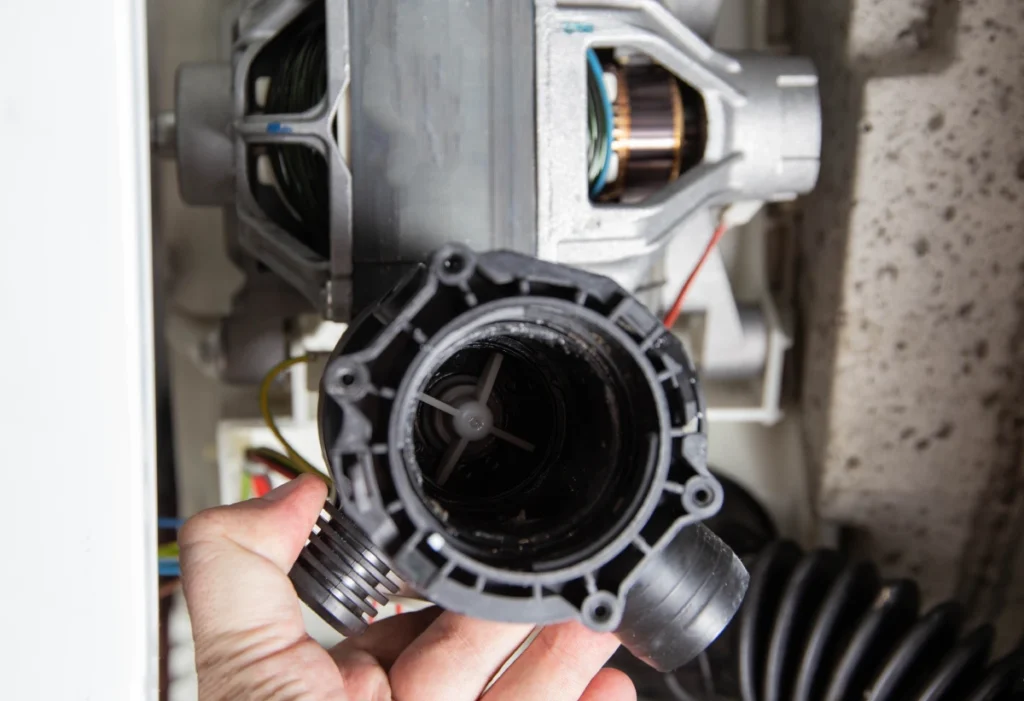
The pump is responsible for pumping out the water. If it fails, the water will remain in the tub, and the spin cycle will not start. A technician will diagnose the issue and replace the pump if necessary.

Faulty drain pump

Motor failure or worn brushes

Over time, the motor brushes that transmit current to the rotor wear out. This leads to a loss of power, and the drum stops spinning at high speeds. It is important to fix this problem as soon as possible to prevent the metal part of the brush from damaging the motor’s commutator.

Damaged drive belt

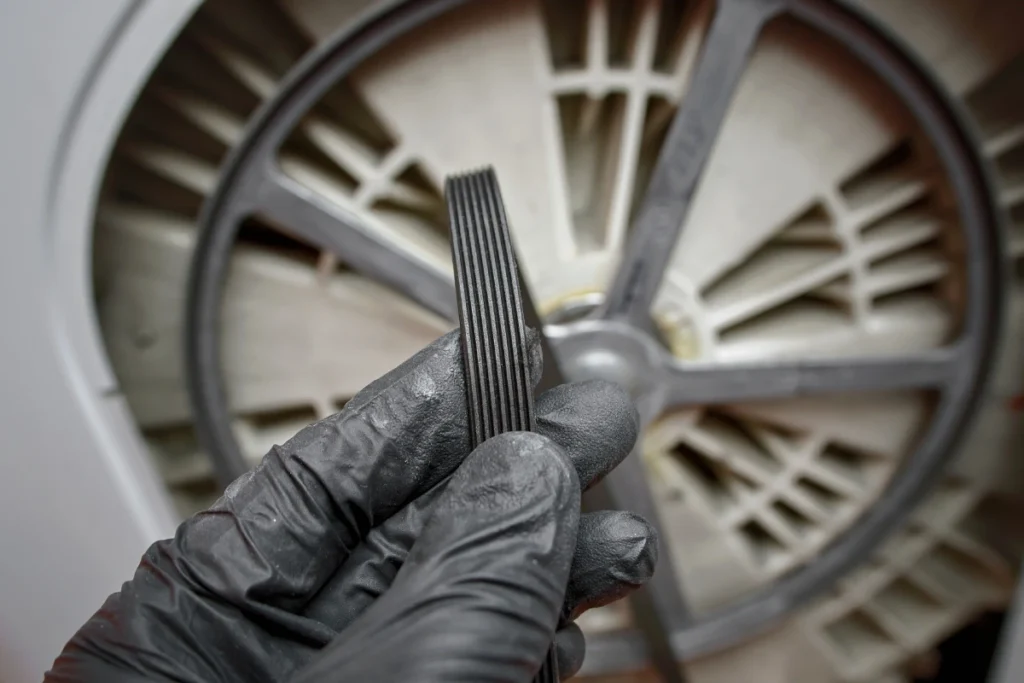
The belt transfers rotation from the motor to the drum. It can stretch, slip off, or break. In this case, you might hear the motor running, but the drum will not spin.

Torn or Slipped Drive Belt

Control module problems

The electronic board (the machine’s “brain”) controls all processes. A malfunction in its operation can result in the command for the spin cycle simply not being given. This is one of the most complex breakdowns, requiring professional diagnostics.

Wiring or sensor issues

A broken wire, a faulty water level sensor (pressure switch), or a tachometer sensor (which controls motor speed) can all block the spin function.

Brand-Specific Washing Machine Issues

Over the years, we’ve noticed that different manufacturers have their own “weak spots.” Knowing these specifics helps a technician make an accurate diagnosis more quickly.

  • LG, Samsung: These brands’ appliances are packed with electronics, so problems with the control module and numerous sensors are more common.
  • Whirlpool, Maytag, Amana: For these brands, a common issue is the failure of the drain pump.
  • Bosch, Electrolux: These European machines more often experience problems with the door lock (Lid Lock Assembly), which may not send the signal to the board to start the spin cycle, as well as drive belt wear.
  • Frigidaire, GE: Here, we most often encounter issues with the motor and the overall control system.

Keep in mind that the brand matters:

parts for different models aren’t interchangeable, and proper diagnostics require detailed knowledge of each design.

How to Prevent Future Breakdowns

Prevention is always better and cheaper than repair. Follow these simple rules to ensure your washing machine serves you for a long time:

  • Regularly clean the filter and check the drain hose (at least once every 2-3 months). Buttons were found at the bottom of the photo during preventive cleaning of the washing machine pump filter

  • Do not overload the drum. Leave a hand's width of free space between the laundry and the top of the drum.

  • Use quality detergents and do not exceed the recommended dosage to avoid excessive suds.

  • Run a maintenance wash. Once every few months, run a cycle at the highest temperature without any laundry, adding a special cleaning agent or citric acid.

  • Ensure proper installation. The machine should stand on a level, solid surface to avoid excessive vibration, which destroys bearings and other components.

Prevent Future Breakdowns

Signs You Should Call a Professional Right Away

Some symptoms clearly indicate a serious problem. Do not delay in calling a specialist if:

  • The machine does not respond to button presses at all.

  • There is a burning smell, you see sparks, or hear loud grinding and knocking sounds.

  • The water does not drain even after you have cleaned the filter.

  • The machine suddenly shuts off in the middle of a wash cycle.

  • An error code constantly appears on the display and does not disappear after a reboot.

Why Trust Ok Charlotte Appliance Repair?

When your home appliance breaks down, it’s important to entrust its repair to true professionals. Residents of Charlotte, North Carolina, choose us for several reasons:

  • Over 10 years of experience. We know all the ins and outs of appliance repair in Charlotte and the surrounding areas.

  • Repair of all brands. Our technicians can handle any breakdown, whether it's an LG, Whirlpool, Bosch, or GE.

  • Only original parts. We use high-quality components, which guarantees the long and reliable operation of your appliance after the repair.

  • 90-day warranty. We are confident in our work, so we provide a warranty on all services performed and parts installed.

  • Same-day service. We understand how important a working washing machine is and are ready to come to your aid as soon as possible.

  • Local specialists. We are your neighbors who understand the needs and value the time of Charlotte residents.

Appliance Repair team

Don’t delay repairs—call us today and get your home running smoothly again!

+

Request a call

Please leave your contact details.
The manager will contact you shortly.