What to Do If Your Washing Machine Drum Isn't Spinning: A Detailed Diagnostic Guide

What to Do If Your Washing Machine Drum Isn't Spinning: A Detailed Diagnostic Guide

You’ve loaded the laundry, selected a cycle, and the machine fills with water… but then nothing happens. The drum stays still, and the wash cycle never starts. This is one of the most concerning malfunctions, since the drum’s spinning is essential for cleaning your clothes. Causes can range from simple issues you can fix yourself to problems that require professional repair.

It’s important to understand the difference: it’s one thing if the machine washes but fails to start the high-speed spin at the end, leaving the laundry soaking wet. It’s quite another when the drum is motionless from the very beginning of the cycle. In this article, we will focus on the second, more critical situation. We’ll explore what you can check yourself, when you need to schedule a washing machine repair, and how to avoid similar problems in the future.
Drum Won’t Spin? Key Issues and What You Can Do

Before calling a service center, it’s worth ruling out a few simple causes that could be preventing the motor from working. Often, the solution is right on the surface.

1. Door (Lid) Problem

This is the #1 safety system of your dryer. If the door is not closed securely or the locking mechanism has not engaged, the machine will not receive the signal to start spinning. With a functioning lock, you typically hear a distinct click – if you don’t hear it, the wash won’t start. On some models, a lock indicator may flash or a beep may sound to signal the problem.

Open and close the door again, applying a little pressure. Make sure no clothing is caught between the door and the machine’s body.

2. Program or Electronic Glitch

This is a classic case where turning it off and on again can help. Sometimes, the control module can “freeze” due to a power surge, and as a result, the command to start the motor is never sent.

Perform a full reboot of the machine. Unplug it from the power outlet for 15–20 minutes, then plug it back in and try to start the cycle again.

3. Critical Overload

If you’ve loaded too much laundry into the drum, especially heavy and bulky items, the protection system may block the motor from starting to prevent damage.

Remove about a third of the laundry and try to start the wash cycle again. Always leave a hand’s width of free space at the top of the drum.

4. The Drum is Jammed by a Foreign Object

A small item could have gotten trapped between the tub and the drum, physically blocking its rotation. On top-loading models, the inner drum doors can sometimes open slightly and jam the drum’s movement.

Unplug the machine and try to gently turn the drum by hand. If it moves with difficulty, feels tight, or you hear a scraping sound, it is likely jammed. Sometimes the object can be removed through the heating element opening, but this procedure is best left to a professional.

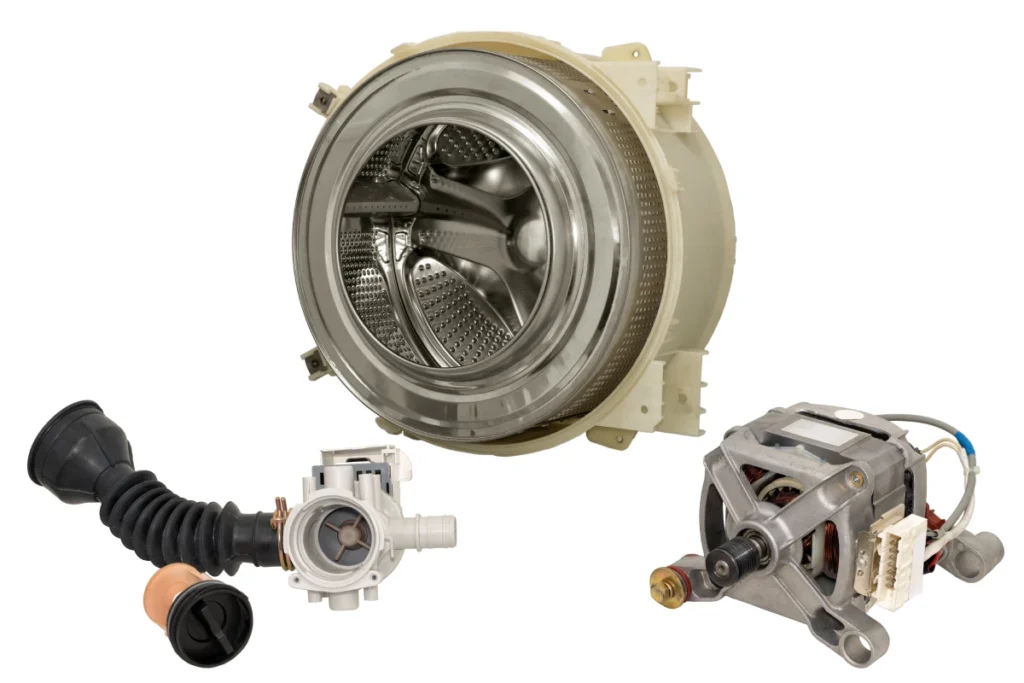
In the photo below, you can see the gap between the washing machine drum and the plastic tub.

Drum washing

The Drum Won’t Spin: When the Cause Is Serious

If these simple checks haven’t helped and the drum remains still, the cause is most likely due to the wear or failure of a key component. Attempting a DIY repair in this case can be dangerous and lead to even greater expenses.

1. Torn or Slipped Drive Belt

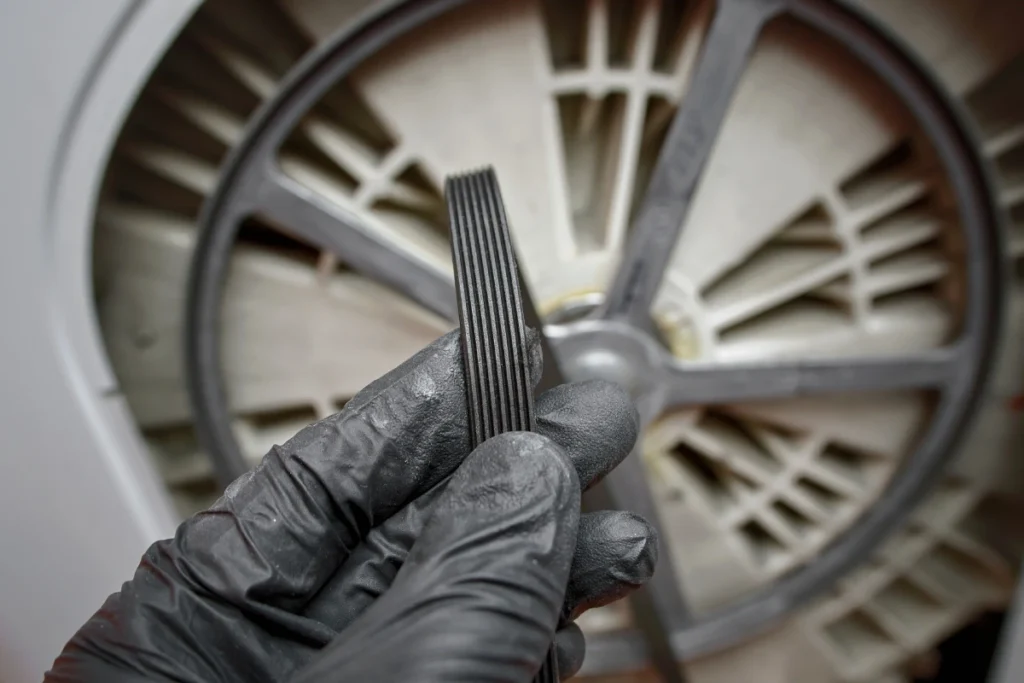
In most washing machines (except for direct-drive models), the rotation is transferred from the motor to the drum via a belt. Over time, this belt can stretch, slip off, or break.

You can hear the motor running (humming), but the drum doesn’t spin. If you turn it by hand, it will move too easily, with no resistance.

Torn or Slipped Drive Belt
Motor Malfunction

2. Motor Malfunction

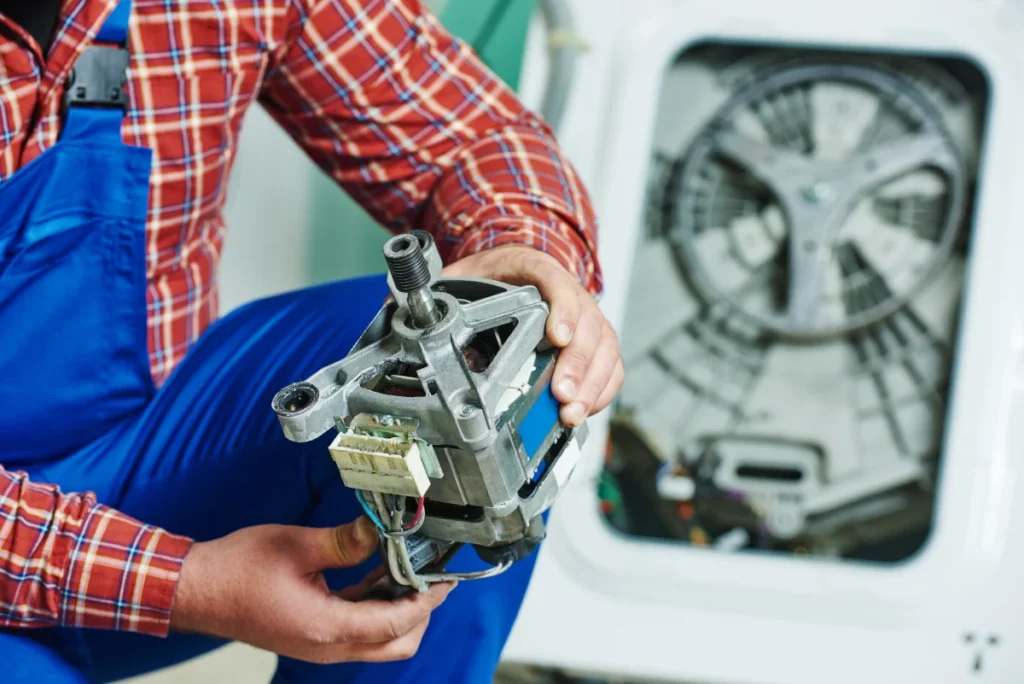
This is the “heart” of the machine, and its failures can vary. The most common issue is worn-out carbon brushes, which transfer electricity to the rotor. A break in the winding or other internal damage is also possible.

When you try to start the wash, you don’t hear the motor running, or it hums but can’t start, and you might see sparks near the motor. If only the brushes are worn out, a technician can easily replace them. However, if the old brushes have damaged the commutator, a more complex repair will be required. In the case of a broken winding, the entire motor needs to be replaced, as repair is not cost-effective.

3. Failed Control Module

The electronic board is the “brain” of the washing machine. If a component responsible for controlling the motor burns out, the command to spin will simply not be sent.

The machine performs other actions (fills with and drains water, indicators light up), but the motor doesn’t even attempt to start.

Malfunction of the Water Level Sensor (Pressure Switch) or Tachometer

The pressure switch tells the control board that the water has filled and it’s time to start washing. The tachometer (or speed sensor) reads the motor’s RPM. A failure of either of these sensors can block the cycle from starting.

4. Wiring Problems

Inside the machine, wires can fray from vibration, corrode from moisture, or become disconnected from their terminals. This results in a lost connection between the control module and the motor.

Common Failures by Brand

Every brand has its own design features that influence typical malfunctions.

  • Samsung: The electronics in these machines are sensitive to power fluctuations, making control module failure a common issue. Problems with the tachometer are also encountered.
  • Whirlpool: These machines are known for issues with the drive belt slipping off or tearing, especially after several years of use.
  • GE: A vulnerable area, particularly in older models, is the motor and its components (like the brushes). Control module glitches can also occur.
  • LG: On direct-drive machines, there is no belt, so the problem most often lies with the inverter motor itself or its control board.
  • Maytag: These are reliable machines, but over time, mechanical parts in older models can wear out, including the motor and its drive assembly.

How to Prevent Future Breakdowns

Following the operating rules can significantly extend the life of your washing machine.

  • Do not overload the drum.

  • Check pockets before washing to prevent foreign objects from getting in.

  • Use a voltage stabilizer if power surges are common in your home.

  • Schedule a professional preventive inspection at least once a year.

  • Ensure the machine is properly grounded: this not only protects you from electric shock but also reduces the risk of electronic failures.

When Should You Call a Technician Immediately?

Some symptoms clearly indicate a serious breakdown. Contact a service center immediately if:

  • You hear the motor humming, but there is no rotation.

  • The drum won't turn by hand, or conversely, it feels loose and wobbly.

  • You notice a burning smell or see smoke.

  • The circuit breaker trips when you try to start a cycle.

  • The machine is making a loud grinding or banging noise.

Why Choose Ok Charlotte Appliance Repair?

When your washing machine stops working, it’s important to entrust its repair to professionals who can solve the problem quickly and effectively. Ok Charlotte Appliance Repair is your reliable partner in home appliance repair.

We have over 10 years of experience in the market, allowing us to accurately diagnose and fix malfunctions of any complexity. Our technicians work with all popular washing machine brands, from Samsung and LG to Whirlpool and Maytag. We use only original parts in our work, which guarantees a long service life for your repaired appliance. We provide a 90-day warranty on all completed work and installed parts.

Our Team

Don’t let a breakdown disrupt your daily life. If your machine’s drum has stopped spinning, contact Ok Charlotte Appliance Repair, and we will get your appliance back in working order in the shortest possible time!

+

Request a call

Please leave your contact details.
The manager will contact you shortly.